 UGX
 KES - Kenya
 TZS - Tanzania
 RWF - Rwanda
 NGN - Nigeria
 ZAR - South Africa
 USD - Zimbabwe
 GHS - Ghana
 ETB - Ethiopia
 ZMW - Zambia
 USD - International

Uganda’s restaurants range from rolex stands and local food joints in Kampala to lakeside restaurants in Entebbe and hotel kitchens in Fort Portal. Mobile money is how most customers pay, and food costs move with the seasons.
Recipes first, prices second
A menu price is only right if you know what the dish costs to make. Write a recipe for each dish with exact quantities, keep ingredient prices current, and review the cost whenever a supplier raises prices.
With the Restaurant Pro add-on, every dish is linked to a recipe, and you see its plate cost and food-cost percentage. The menu engineering view, with dishes sorted into stars, plowhorses, puzzles and dogs, tells you where to focus: promote the stars, re-price the plowhorses and rethink the dogs.
Tables, bookings and the kitchen
Orders should go from the table to the kitchen without being rewritten. Taking orders on the till at the table, or right after, keeps the kitchen and the bill in step: what the kitchen cooks is what the customer pays for.
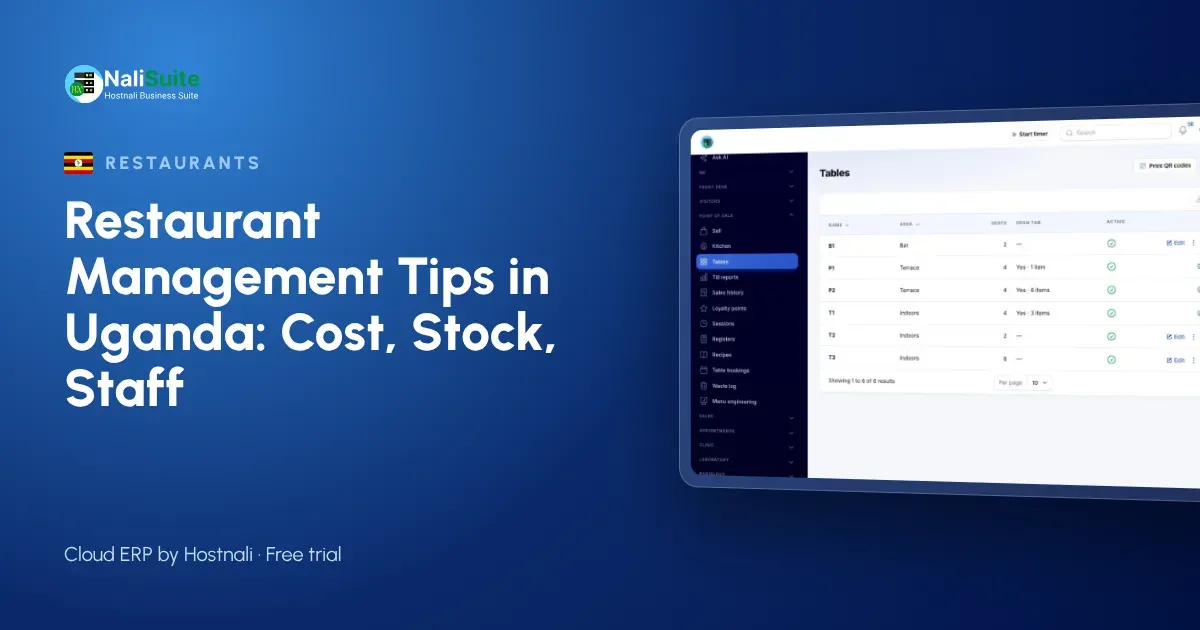
Point of Sale has restaurant tables built in, so a waiter opens a table, adds dishes through the meal and takes payment at the end, split across payment methods if the guests want. Restaurant Pro adds table bookings, so you know before service how many covers to prepare for.
Example: a local food restaurant in Kampala
A restaurant in Ntinda serves matoke, luwombo and posho with beans to a busy lunch crowd. Matooke and meat prices change with the season, and the owner set prices once a year.
With recipes for each dish, plate costs now follow the purchase prices. During the dry season the luwombo’s plate cost rose sharply, and the menu engineering view flagged it as a plowhorse. A small seasonal price change kept it profitable, and the owner now reviews plate costs at the start of each month.
Control the store room
The store room is where restaurant profit leaks quietly. Link recipes to dishes so that ingredients are deducted from stock with every sale, then count the key items regularly in Inventory and investigate any gap.
Log waste as it happens. Restaurant Pro keeps a waste log, so the burnt batch or the expired cream is recorded rather than blamed on someone. Use Purchases to order from suppliers against reorder levels, which keeps cash from being tied up in stock you do not need.
Ugandan details
Most customers pay by MTN MoMo or Airtel Money, so the till should record those payments against each order. For VAT and EFRIS requirements on your receipts, check with URA or your accountant.
If you also bake, run outside catering or supply other outlets, the Food production add-on plans daily production, costs catering quotes per head and manages deliveries and returns.
Payments and power cuts
Two things should never stop a sale: a lost connection and a customer who wants to pay differently. NaliSuite’s till keeps selling when the internet drops and syncs later, so the offline POS is ready for a power cut in the middle of lunch.
Accept cash and MTN MoMo or Airtel Money, split a bill between payment methods if needed, and send receipts by SMS or WhatsApp. The payments feature records each payment against the right sale, which makes cashing up quick.
Getting started without disrupting service
Start with the till and your menu in the first week, so every sale is recorded. Add recipes for your ten best-selling dishes next and look at their plate costs. Then switch purchasing to purchase orders and begin a weekly stock count. Within a month you will know your food cost, your waste and your best dishes, without closing for a single day.
Staff, shifts and pay
Kitchens and floors run on shifts, and wages are usually the biggest cost after food. Record attendance properly so that overtime and absences flow into pay without arguments. NaliSuite HR handles attendance and leave from staff phones, and Payroll turns them into pay runs and payslips.
Give each waiter and cashier their own login instead of sharing one, so it is always clear who was working the till on each shift. It is fairer to good staff and makes problems easier to trace.
Frequently asked questions
Can customers pay by MTN MoMo or Airtel Money?
Yes. Payments are recorded against the order at the till, alongside cash and card.
How often should I review plate costs?
Whenever a key ingredient price changes, and at least once a month. The plate cost updates from your purchase prices.
How often should I count stock?
Count your most expensive ingredients weekly and the full store room monthly. Because sales already deduct ingredients, a count shows you the gap straight away.
Try NaliSuite
Try it for a week alongside your current till: write recipes for your five best sellers and compare the plate costs with your prices. NaliSuite plans start at UGX 8,500 a month; see the plans and how it works for restaurants and cafés.