 UGX
 KES - Kenya
 TZS - Tanzania
 RWF - Rwanda
 NGN - Nigeria
 ZAR - South Africa
 USD - Zimbabwe
 GHS - Ghana
 ETB - Ethiopia
 ZMW - Zambia
 USD - International

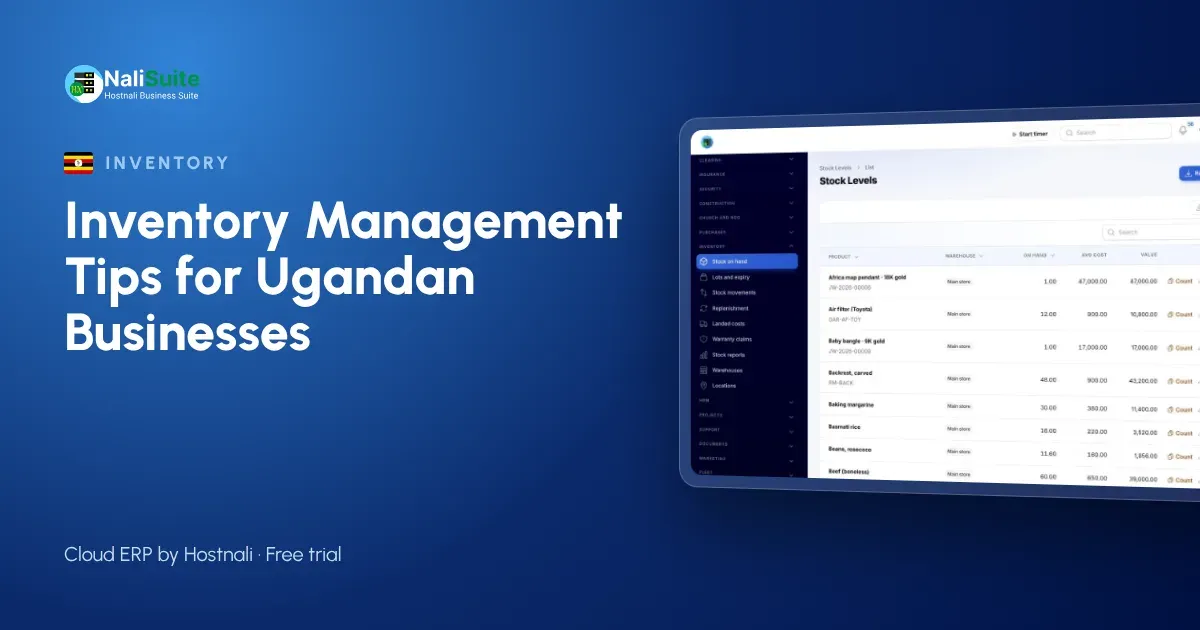
Kampala’s wholesale streets move enormous amounts of stock every day, and so do shops in Mbarara, Gulu and Mbale. When stock is your biggest asset, knowing exactly what you have is not optional. These tips cover the basics every Ugandan shop, wholesaler and pharmacy should get right.
Know when to reorder
A reorder point is the stock level at which you place a new order. Work it out from how much you sell each day and how long your supplier takes to deliver, then add a small safety buffer. For example, if you sell 10 cartons a day and delivery takes 5 days, reorder when you have about 60 left.
Start with your top 50 items. Once those never run out, extend reorder points to the rest of the range.
Why stock control matters in Uganda
Many retailers buy from Kikuubo wholesalers in cash and in bulk, and prices change often. Without records, you never quite know your margin on each line.
Wholesalers supply shops upcountry on credit and by road, so stock leaves before payment arrives. Pharmacies must track batches and expiry dates. Electronics shops need serial numbers for warranties. Each of these is a reason to move beyond a notebook.
One stock list for every location
Once you have a second shop or a warehouse, give each its own stock location. Sales at each till reduce that location’s stock, deliveries go into the right one, and transfers move goods between them with a record of who sent what and when.
The payoff is simple: before you buy more, you can check whether another branch already has it.
Example: a pharmacy in Mbarara
A pharmacy in Mbarara stocks a few hundred medicines, many with short shelf lives. Each delivery is received with its batch number and expiry date. A monthly report lists what expires in the next three months, so slower lines are sold first or returned to the supplier where possible.
Reorder points based on real sales mean fewer emergency trips to Kampala for stock that ran out unexpectedly.
Free up cash tied in slow stock
Every business has lines that looked like a good idea and now gather dust. A monthly report of items with little or no movement shows them clearly. Clear them with a promotion, bundle them, or return them if your supplier allows, and remove them from future orders.
The cash you free up is often enough to stock more of your best sellers.
Mistakes Ugandan businesses can avoid
- Buying blind in Kikuubo. Know your sales history before you buy in bulk.
- Selling upcountry without a record. Each delivery to a credit customer should reduce stock and appear on their account.
- No serial numbers. For phones and electronics, a missing serial number makes warranties and theft hard to trace.
- Ignoring near-expiry stock. A monthly report lets you sell it before it becomes a loss.
Get your opening stock right
Before you can manage stock you need a true starting point. Close early one day or come in on a Sunday, count everything once and record it as opening stock. Barcode labels and a phone scanner make this much faster than a clipboard.
From then on, do not wait for the annual stock-take. Count one aisle or category each week. The aim is not to find every error at once but to find them while they are small.
Getting started in Uganda
Import your product list with cost price, selling price and barcode, and count your stock to set opening levels.
Set reorder points for your top sellers based on how long your supplier takes to deliver, whether from Kikuubo or from abroad. For electronics, record serial numbers on receiving and at the till. For medicines, record batches and expiry dates.
If you supply shops upcountry on credit, record each delivery as a sale on their account. Your stock and receivables stay in step, and statements can go out by WhatsApp.
Frequently asked questions
Can I track batches and expiry dates?
Yes. NaliSuite inventory records lots (batches) and serial numbers, and you can track expiry dates for perishable or regulated stock.
How do purchase orders help with stock?
Deliveries are checked against the order before they are accepted, so shortages and wrong items are caught before you pay the supplier.
Do I need barcodes?
They are not essential but they make counting and selling faster and more accurate. NaliSuite prints barcode labels and scans with a USB scanner or a phone camera.
Try NaliSuite
NaliSuite inventory comes with every plan from UGX 8,500 a month, together with the point of sale, purchases and accounting. Start a free trial and import your product list in minutes. See plans.