 UGX
 KES - Kenya
 TZS - Tanzania
 RWF - Rwanda
 NGN - Nigeria
 ZAR - South Africa
 USD - Zimbabwe
 GHS - Ghana
 ETB - Ethiopia
 ZMW - Zambia
 USD - International

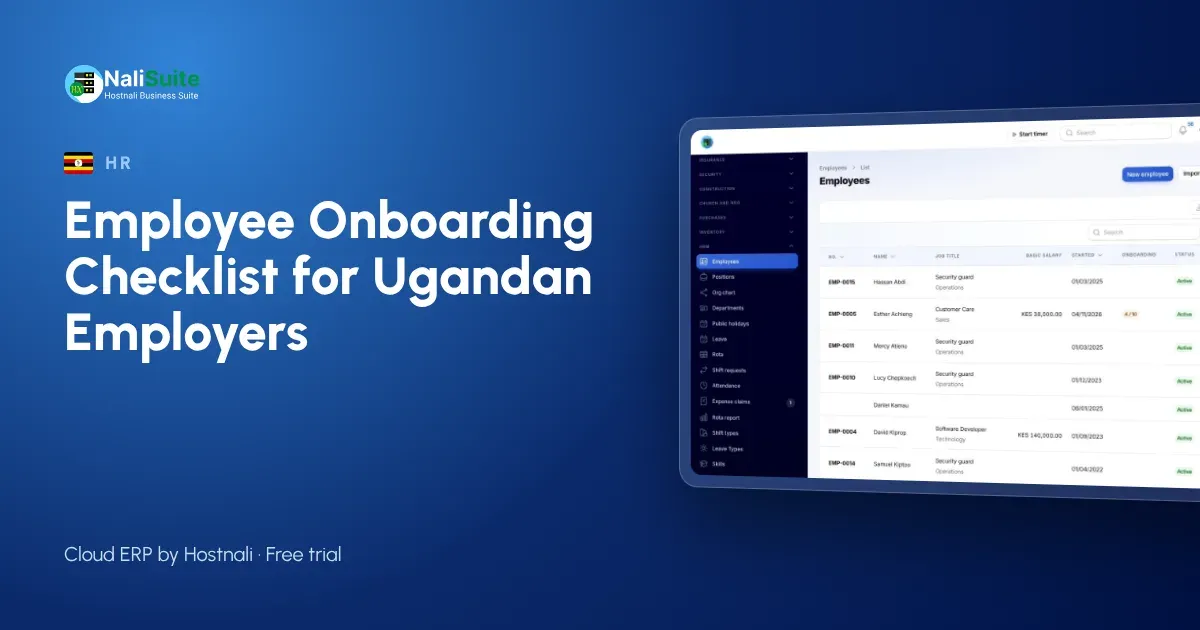
A receptionist, a night guard and a sales manager do not need the same first week. Yet many Ugandan employers give everyone the same treatment: a contract, a handshake and a uniform, if they are lucky.
This guide splits onboarding by the kind of role, because that is where it usually goes wrong, then covers the details Uganda’s payroll needs, with an example from a hotel in Entebbe.
What every new hire needs, whatever the role
Some things are the same for everybody. Before the first day, have these ready:
- A signed contract and job description.
- An employee record with the National ID number, URA TIN, NSSF number, and a bank or mobile money account for pay.
- Next of kin and an emergency contact.
- Whatever equipment the job needs, recorded against the employee’s name.
- A named supervisor.
On day one, every new person should leave knowing their hours, who to call if they are sick and how to ask for leave.
Office staff: get them working by day three
Office roles fail when people sit waiting for logins and access. Set up email, system accounts and permissions before the start date. Plan a few real tasks for the first three days, and book a 30-minute review at the end of week one. Introduce them to the colleagues and customers they will work with, in person where you can.
Shift staff: onboard every shift pattern
Guards, kitchen staff, cleaners and machine operators often start on a night or weekend shift when HR is not there. Do the paperwork during a day shift before they start, and give them a written sheet with the shift times, the supervisor’s number and the rules for swaps.
Attendance matters most for these roles, because it decides overtime and pay. With phone check-in inside a geofence set around the site, NaliSuite records when each person arrives and flags late arrivals for the supervisor.
Field staff: onboarding on the phone
Sales reps, drivers and technicians who travel across Kampala and upcountry rarely see head office. Their onboarding happens on the phone:
- Install the employee app from the browser on their first day.
- Show them how to check in, apply for leave, claim expenses with a photo of the receipt and find payslips.
- Add them to a Team chat group for their team or region, so work messages stay out of personal apps.
Payroll details for Uganda
The first payslip should be right first time. For Uganda, NaliSuite’s payroll handles:
- NSSF: 5% of gross pay from the employee and 10% from the employer, due by the 15th of the following month.
- PAYE: due to the Uganda Revenue Authority by the 15th of the following month. From 1 July 2026, the first UGX 335,000 a month is tax free (Income Tax (Amendment) Act, 2026).
- Local Service Tax: set by the local government by income band. Record which bands apply to your staff.
You set the PAYE bands in NaliSuite’s settings, so check current rules with URA before the first run and update them when the law changes. A mid-month starter needs a pro-rated first salary and still appears on that month’s PAYE and NSSF returns.
Example: twenty new staff at an Entebbe hotel
A hotel in Entebbe recruited twenty staff ahead of the conference season: waiters, housekeepers, two chefs and a night manager. The HR officer used to hand each person a printed form and type it into a spreadsheet, and the first payroll always had corrections.
This time, each hire went straight into the HR app. An onboarding checklist started on its own for each person, with tasks for HR, the head of department and the stores team that issues uniforms. Night staff were set up during the day before their first shift. When payroll ran at the end of the month, attendance, NSSF and PAYE were all in place, and payslips went out in the app and on WhatsApp.
Keep staff records private
Uganda’s Data Protection and Privacy Act, 2019 covers employee data, and the Personal Data Protection Office oversees it. Keep contracts and ID copies on the employee record in Documents, not on phones or flash disks, and limit who can open them. NaliSuite shows each user only what their role allows.
Managers need onboarding too
Senior hires are often left to find their own way, on the assumption that they know what to do. They know their job, but not your business. Give a new manager a list of the people to meet in the first two weeks, the reports they will be responsible for, and the decisions they can take alone. Agree their first 90-day goals in writing, the same as for any other hire.
Frequently asked questions
When does NSSF start for a new employee in Uganda?
From the first salary. NSSF is due by the 15th of the following month, at 5% from the employee and 10% from the employer.
Can staff without smartphones use the app?
The employee app needs a smartphone with a browser. For staff without one, the supervisor or HR handles leave requests on their behalf and shares payslips with them.
Can new hires see their leave balance?
Yes, in employee self-service, along with attendance and payslips.
Try NaliSuite
Ugandan employers can run HR, PAYE and NSSF payroll and the staff app together, from UGX 8,500 a month after a free trial. See the plans.