 UGX
 KES - Kenya
 TZS - Tanzania
 RWF - Rwanda
 NGN - Nigeria
 ZAR - South Africa
 USD - Zimbabwe
 GHS - Ghana
 ETB - Ethiopia
 ZMW - Zambia
 USD - International

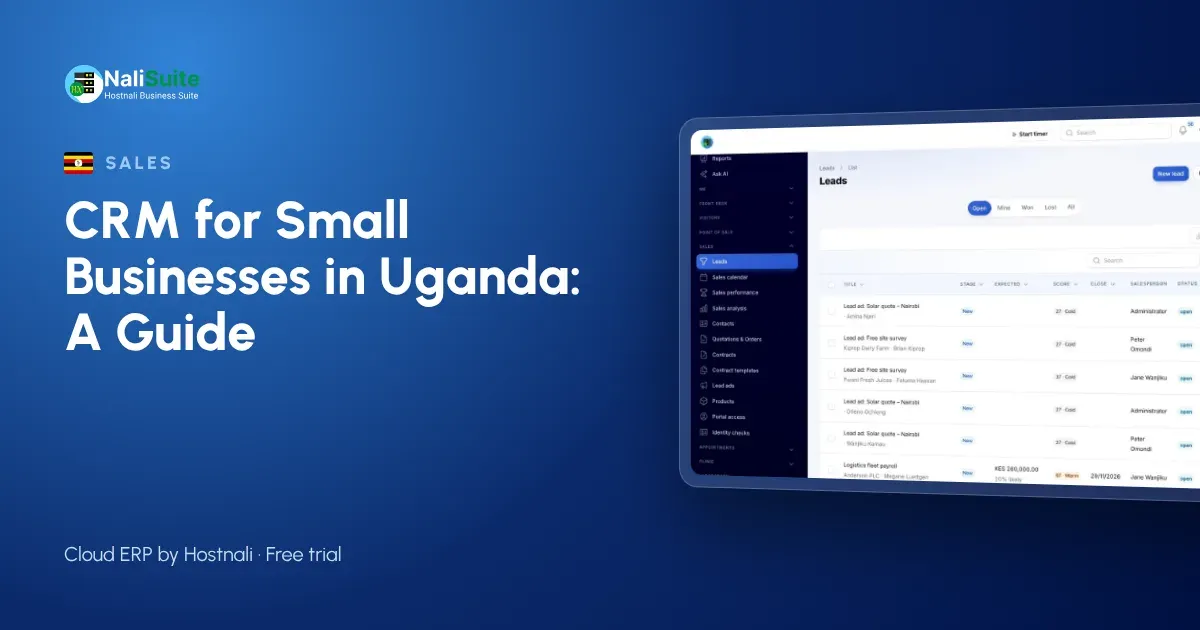
A CRM is not only for big sales teams. For a school in Kampala filling places, or a hardware shop in Jinja chasing contractor orders, it is the difference between following up and forgetting.
This guide shows how Ugandan small businesses can set up a CRM that the whole team uses.
What a CRM actually does
A CRM (customer relationship management system) is one place for every lead and customer: who they are, what they asked about, every call and message, every quotation and what happens next. Its job is simple: make sure no promising conversation is forgotten.
Pipeline stages that fit a small business
Too many stages slow people down. This simple board works for most small teams:
| Stage | Next step |
|---|---|
| Enquiry | Reply within the same day |
| Qualified | Confirm need, budget and timing |
| Proposal | Send a quotation |
| Follow-up | Call before the customer goes cold |
| Closed | Record won or lost, and why |
Where your leads come from
Leads come from many places: website forms, WhatsApp, Facebook and Instagram ads, phone calls and walk-ins. The more of them land in the CRM automatically, the less typing your team does. In NaliSuite, website forms and Facebook and Instagram lead ads create leads by themselves, and WhatsApp conversations can become leads too.
Example: admissions at a private school in Kampala
Consider an example private school in Kampala. Parents enquire by phone, on WhatsApp and at open days. The admissions officer kept a register, but follow-ups depended on her memory, and some families enrolled elsewhere while waiting for a call back.
With a CRM, every enquiry becomes a lead with the child’s class and the parent’s contact. Visits, interviews and offers are stages in the pipeline. Reminders prompt calls, and the head teacher can see how many places are likely to be filled before term starts.
Follow-ups that do not slip
Follow-ups slip when they live in someone’s head. In a CRM, every lead has an owner and a next activity with a date. Each morning, salespeople open their list of today’s follow-ups and work through it.
From quotation to invoice
When a lead is ready, send the quotation from the CRM rather than a separate document. In NaliSuite, Sales and Quotations builds a branded quotation from your price list, the customer accepts it online, and it becomes an order and an invoice without retyping.
Deposits and fees by mobile money
Send offers and invoices with a pay link so families or customers can pay by MTN MoMo, Airtel Money or card. Payments are matched to the invoice automatically. See mobile money payments in NaliSuite.
What to measure
| Report | Question it answers |
|---|---|
| Pipeline by stage | Where are deals getting stuck? |
| Wins by salesperson | Who needs support? |
| Leads by source | Where should next month’s budget go? |
| Lost deals | What can we fix? |
Using the CRM across the year
For schools, admissions peak before each term; for traders, around holidays and harvests. A CRM shows the pipeline for each period, so you can plan staff and follow-up campaigns.
Log every call and visit. When a parent or customer calls back, anyone on the team can pick up where the last conversation ended.
At the end of each period, look at where your best leads came from, whether open days, referrals, radio adverts or Facebook, and plan the next period’s marketing around them.
Choosing a CRM that fits
Three questions decide most CRM choices. Will the team use it on their phones? Does it capture leads from WhatsApp, forms and ads without copying? Does it connect to quotations, invoicing and payments, or will someone retype every sale? A CRM that answers yes to all three pays for itself quickly; a clever one that nobody opens does not.
Personal data in Uganda
The Data Protection and Privacy Act, 2019 and the Personal Data Protection Office (PDPO) govern personal data in Uganda. Collect what you need, keep it secure, and get consent before marketing messages.
A CRM with access by role keeps data in one protected place rather than on staff phones.
Frequently asked questions
Can a school use a CRM?
Yes. Admissions work like a sales pipeline: enquiry, visit, interview, offer, enrolment. A CRM keeps every family’s progress in view.
What does Ugandan data law require?
Under the Data Protection and Privacy Act, 2019, keep personal data secure, collect only what you need and get consent for marketing.
Is a CRM only for sales teams?
No. Any business that follows up enquiries, such as schools, clinics and service firms, benefits from one.
How much time does a CRM take each day?
A few minutes per salesperson: logging calls and setting next steps. It saves far more time than it takes.
Try NaliSuite
NaliSuite includes a CRM, quotations, invoicing and contacts in every plan, from UGX 8,500 a month with a free trial. See plans.